
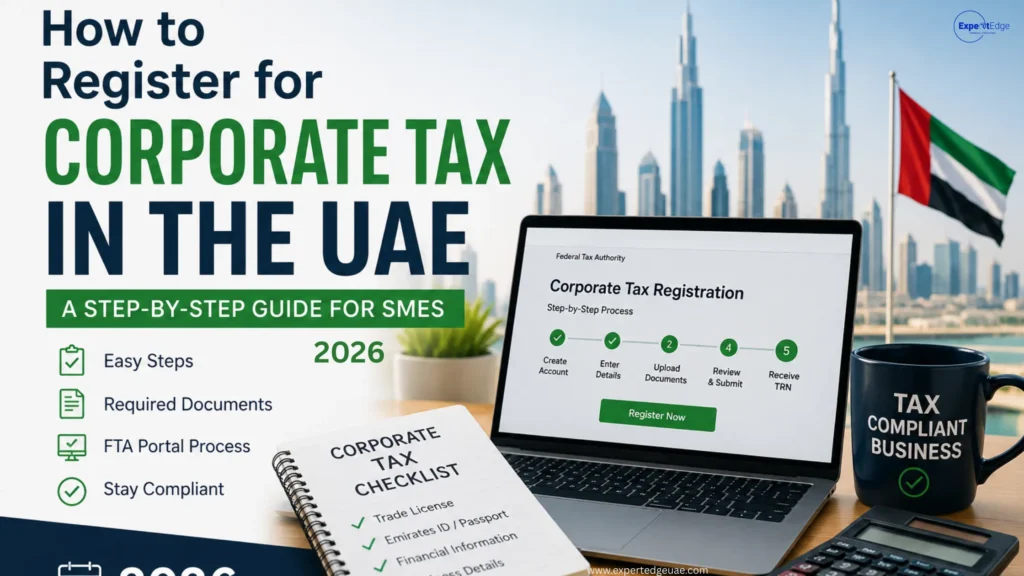
Running a Small Business in the UAE and Unsure About Corporate Tax Registration?
You’re not the only one. Many SME owners in the United Arab Emirates are still trying to understand whether their business needs corporate tax registration and how the process works.
Here’s the short answer:
Yes, many businesses in the UAE must complete corporate tax registration UAE through the Federal Tax Authority portal. The registration requirement depends on your business activity, legal structure, and taxable income.
The UAE introduced corporate tax in 2023 with a standard rate of 9% on qualifying business profits. Since then, SMEs across Dubai, Abu Dhabi, Sharjah, and other Emirates have started updating their tax and accounting processes to stay compliant.
What Is Corporate Tax in the UAE?
Corporate tax is a direct tax applied to the net profits earned by businesses operating in the UAE.
It was introduced to align the UAE with international tax standards and improve financial transparency across businesses.
Key Facts SMEs Should Know
| Corporate Tax Element | Details |
| Introduced | 2023 |
| Standard Tax Rate | 9% |
| Regulated By | FTA |
| Applies To | Eligible UAE Businesses |
Businesses are also expected to maintain proper accounting records and submit tax-related information when required.
Which SMEs Need Corporate Tax Registration in UAE?
Not every business is treated the same way.
Some SMEs are required to register immediately, while others may qualify for relief depending on income and business category.
Businesses That Usually Need Registration
The following businesses commonly require UAE corporate tax registration:
Foreign companies operating in the UAE
Mainland companies
Certain Free Zone businesses
SMEs crossing taxable income thresholds
Foreign companies operating in the UAE
Businesses That May Qualify for Relief
Some businesses may receive exemptions or relief under specific conditions.
These may include:
- Small businesses below qualifying thresholds
- Certain exempt entities
- Eligible Free Zone companies
If you’re unsure where your business falls, it’s a good idea to review the latest guidance issued by the Federal Tax Authority.
Documents Required for Corporate Tax Registration UAE
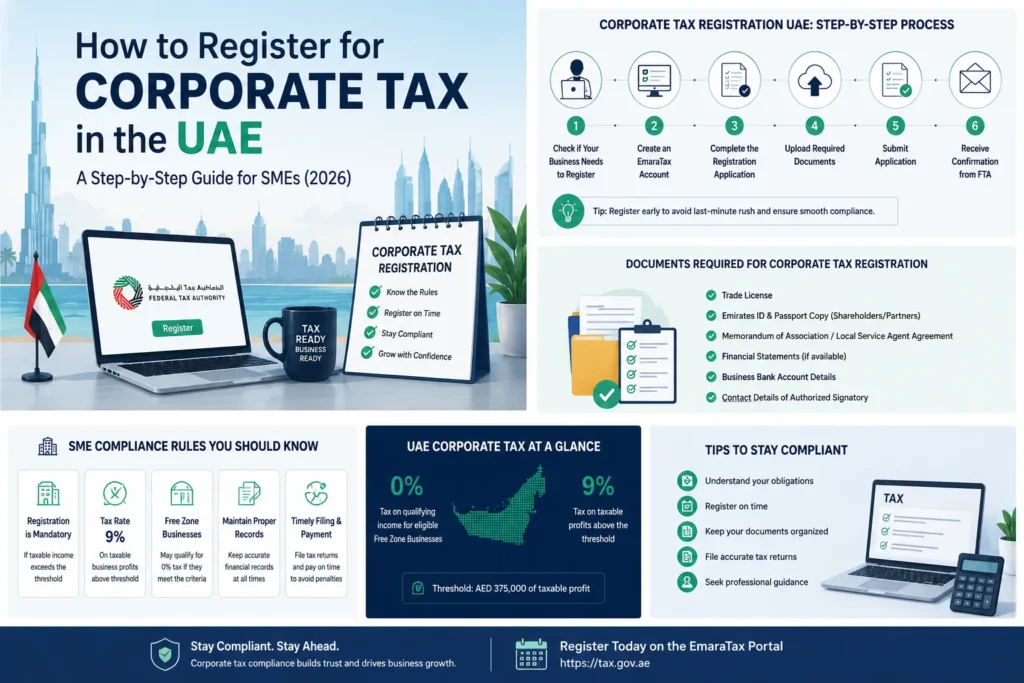
Before starting the registration process, keep all required documents ready.
This saves time and reduces delays later.
Most businesses usually need:
- Trade license copy
- Emirates ID or passport copy
- Business contact details
- Financial information
- Existing VAT or TRN details (if available)
Quick Tip:
Double-check that the company details on your trade license match the information entered during registration. Small errors can slow down approval.
Step-by-Step: How to Register for Corporate Tax in UAE
The registration process is completed online through the FTA portal.
Here’s how it usually works.
Step 1: Access the FTA Portal
Visit the official FTA portal and either:
- Create a new account
- Or log into your existing account
Once logged in, open the corporate tax registration section.
Step 2: Select Corporate Tax Registration
Choose the option for corporate tax registration.
You’ll need to:
- Select your business entity type
- Confirm your legal business details
- Verify registration information carefully
Take your time here. Incorrect information often leads to delays.
Step 3: Upload Required Documents
Next, upload the supporting documents requested by the portal.
This may include:
- Trade license
- Identification documents
- Additional registration details
Review uploaded files before moving forward.
Step 4: Enter Business Information
The portal will ask for business-related details such as:
- Business activity
- Financial information
- Contact details
- Ownership information
This step is important because the information should match your official business records.
Step 5: Review and Submit the Application
Before submitting:
- Recheck all details carefully
- Confirm document uploads
- Review company information once more
Then submit the application.
Step 6: Receive Your Tax Registration Number (TRN)
After approval, the business receives a Tax Registration Number (TRN).
The processing timeline may vary depending on:
- Document accuracy
- Verification requirements
- Application completeness
Once approved, businesses should begin preparing for ongoing tax compliance obligations.
Quick Registration Overview
| Registration Step | Action |
| Portal Access | Log into FTA account |
| Document Upload | Submit required files |
| Final Submission | Verify and complete registration |
Common Corporate Tax Registration Mistakes SMEs Make
A lot of registration delays happen because of avoidable mistakes.
Some common issues include:
- Incorrect company details
- Missing documents
- Wrong financial information
- Delayed registration
- Selecting the wrong business category
These small mistakes can slow down approval or create compliance problems later.
How SMEs Can Stay Compliant After Registration
Registration is only the beginning.
Businesses should also maintain proper financial and tax practices moving forward.
Here are a few important habits:
- Maintain accurate accounting records
- File returns before deadlines
- Track taxable income regularly
- Stay updated with FTA rules
Many SMEs use professional accounting and bookkeeping services to maintain proper records and reduce reporting mistakes.
Why Many Businesses Choose Professional Corporate Tax Support
Some SMEs prefer expert support because tax registration can feel confusing, especially for first-time applicants.
Working with professionals like
Expert Edge UAE
can help businesses:
- Complete registration accurately
- Reduce compliance risks
- Maintain proper documentation
- Stay updated with UAE tax regulations
Professional support can also help businesses avoid delays caused by incomplete applications or incorrect filings.
Helpful Internal Resources
Businesses can also explore:
- Corporate Tax Advisory Services
- Accounting & Bookkeeping Services
- VAT Registration Services
- Audit & Compliance Services
These services can support long-term business compliance in the UAE.
Key Takeaways
- Many SMEs in the UAE are required to register for corporate tax
- Registration is completed through the FTA portal
- Accurate information helps avoid delays
- Good accounting practices support compliance
- Professional guidance can reduce registration issues
Conclusion: Register Early and Stay Compliant
Corporate tax registration has become an important part of running a business in the UAE.
Understanding the process early helps SMEs avoid unnecessary delays, reporting issues, and compliance risks later.
Businesses looking for help with corporate tax registration in UAE can work with experienced professionals like Expert Edge UAE for proper registration guidance and ongoing compliance support.
FAQ’s
Is corporate tax registration mandatory for SMEs in UAE?
Yes, many SMEs operating in the UAE must complete registration if they meet FTA requirements.
What is the UAE corporate tax rate?
The standard UAE corporate tax rate is 9% on qualifying business profits.
Do Free Zone companies need corporate tax registration?
Some qualifying Free Zone businesses may receive tax benefits, but registration requirements may still apply.
How long does corporate tax registration take?
Processing time depends on document verification and the accuracy of the submitted application.
What documents are required for corporate tax registration?
Businesses commonly need a trade license, identification documents, and business information during registration.